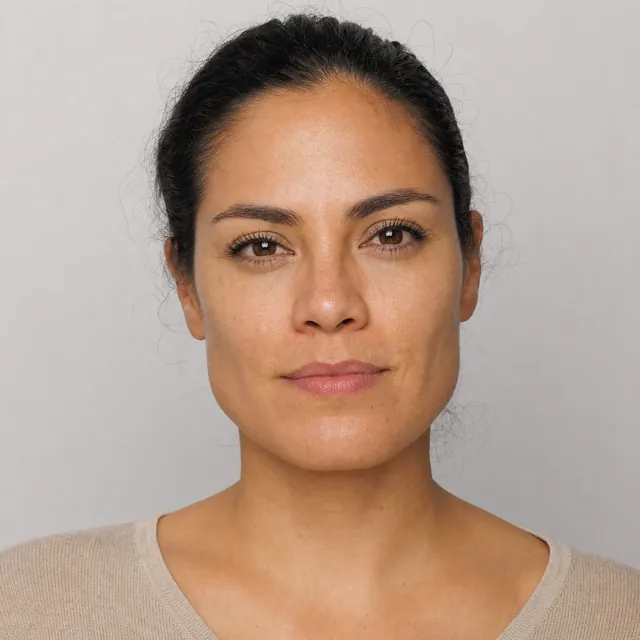
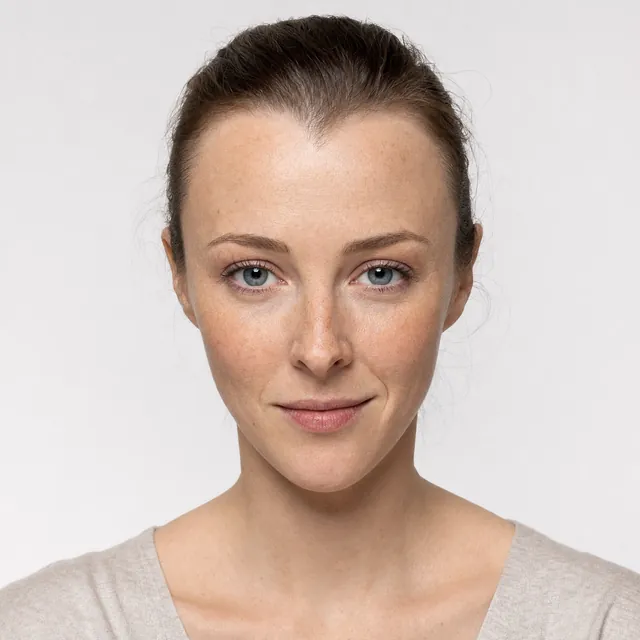
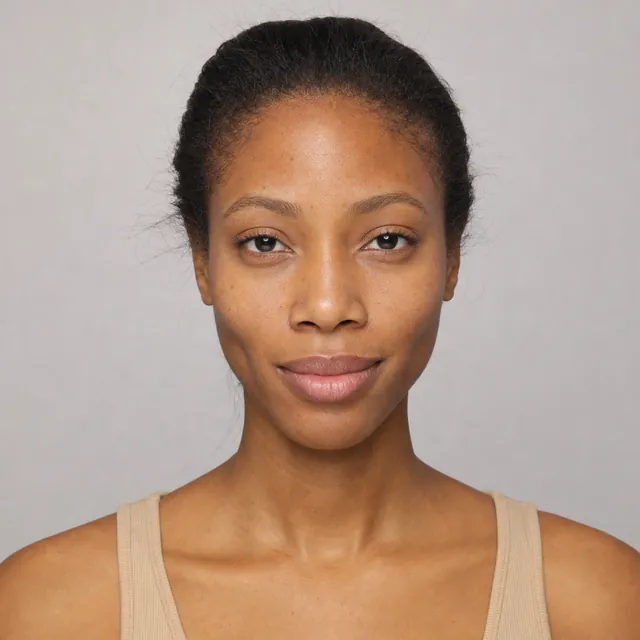
If you've ever asked "what face shape do I have?" and tried to figure it out with a measuring tape and a mirror, you probably gave up after five minutes. Most face shape guides hand you a list of six categories, tell you to measure your forehead and jawline, and leave you to sort it out. That advice sounds helpful until you actually try it and realize your face doesn't neatly match any of the options.
The problem is that those guides treat face shape types like fixed boxes. Oval, round, square, heart, diamond, oblong. Pick one. But faces don't work that way. Makeup artist and style expert Aly Art put it well in her contouring series: "To describe a certain face shape, I would have to describe each person on the planet Earth."
So instead of taking a face shape quiz and hoping for the best, this guide will teach you how to actually read your own face, zone by zone. Whether you're trying to find the best hairstyle for your face shape, figure out where to contour, or just understand why certain makeup looks work on you and not others, it all starts with knowing your proportions.
How to Know Your Face Shape: The Width-to-Length Ratio
Before getting into specific face shape types, you need to figure out one basic thing: is your face on the wide side, the long side, or somewhere in between? This is the first step in any face shape test, whether you're doing it manually or using a face shape analyzer.
Divide your face into three equal horizontal sections. The top section runs from your hairline to the space between your brows. The middle section goes from there to the base of your nose. The bottom section covers from the nose base to the chin.
Now take two of those three sections and compare that measurement to the width of your face at its widest point (usually across the cheekbones).
If the width roughly equals two-thirds of the length, you have what most guides call an "oval" proportion. If your face is wider than that, you're working with a wider face. If it's narrower, you have a longer face.
That gives you three starting categories instead of six:
- Wide proportions (face width is greater than 2/3 of face length)
- Balanced proportions (roughly equal, the classic "oval")
- Long proportions (face width is less than 2/3 of face length)
Every single person falls into one of these three. If you've ever used a face shape calculator or face shape finder online, this ratio is what most of them measure first. This alone tells you a lot about where your makeup for your face shape should go. Wide faces benefit from vertical emphasis (contour on the outer edges, highlight down the center). Long faces benefit from horizontal emphasis (blush placed wider, contour at the top of the forehead and bottom of the chin).
But this is just the starting point. To really determine your face shape, you need to look at the three zones.
The Three Zones That Define Your Face Shape
Your face shape comes from the relationship between three areas: the bottom (jaw and chin), the middle (cheekbones), and the top (forehead and hairline). Each zone can look dramatically different from person to person, and the combinations are what make identifying your face shape so tricky with a simple quiz or chart.
Jaw and Chin
Your jawline and chin are the features that most people notice first when they look at face shapes, and they vary more than you'd expect.
The chin can range from very pointed (tapering to an almost triangular tip) to very rounded (curving smoothly into the jawline with no distinct point at all). Most people fall somewhere between these extremes.
Then there's the jawline itself. Some people have a jaw that's square and prominent, with a clear angle where the jaw turns upward toward the ears. Other people have almost no visible jawline at all, where the chin seems to flow straight up into the cheek area without any hard angle.
For makeup, this zone determines where and how you contour the lower half of your face. A prominent jaw can be softened by shading along the angle. A less defined jaw can be sharpened with a shadow line that creates the illusion of that angle. A pointed chin can be rounded by dabbing a touch of contour on the very tip.
Cheekbones
The cheekbones sit in the middle of the face, and they're the part most people get confused about.
A common mistake is thinking that rounded, full cheeks mean you have a round face. Drew Barrymore is a good example. People constantly say she has a round face, but her proportions are actually a classic oval. What she has is cheeks that aren't bony. The flesh sits forward and soft. You don't see the bone structure underneath.
Compare that to Kate Moss, whose face is actually quite wide in proportion but looks narrow because her cheekbones are prominent and angular. When she turns her head slightly to the side, her face looks dramatically slimmer because of the shadows those cheekbones create.
The distinction matters for makeup because cheekbones are where contour does its most visible work. If you have prominent cheekbones that naturally cast a shadow, you already have built-in contour. When you put on foundation, that shadow gets covered up because foundation reflects light and flattens everything. Contouring in this case is really just putting the shadow back that was already there.
If your cheekbones aren't prominent and your cheek area is softer and rounder, contouring creates a shadow that doesn't naturally exist. The placement needs to be more deliberate, and blending becomes more important because you're sculpting from scratch rather than restoring something that was already visible.
Where your cheekbone hollows sit also varies. Some people have hollows that dip close to the mouth. Others have hollows that sit higher, closer to the ears. Some have an almost vertical shadow line on the sides of their face. Feeling along your cheekbone with your finger while sucking in your cheeks will show you exactly where your hollow falls, and that's where your contour line should follow.
Forehead and Hairline
The top of the face gets overlooked in a lot of makeup tutorials, but it plays a huge role in the overall shape you're working with.
Foreheads can be narrow (visibly narrower than the cheekbones) or wide (same width or wider than the middle of the face). The hairline adds character on top of that. A rounded hairline makes the forehead look softer and more curved. A straighter, more angular hairline creates a squared-off appearance at the top.
Some people have a widow's peak that creates a V-shape at the center of the hairline. Others have a very low hairline with a smaller forehead. These aren't good or bad traits, they're just part of what makes your face uniquely yours.
For contouring, a wide forehead is often shaded along the temples to bring the proportions inward. A narrow forehead can be highlighted to open it up. If your hairline is the widest part of your face and everything narrows downward, you're probably working with what most guides call a heart shape, and your contouring strategy should focus on balancing the top and bottom.
The Six Face Shape Types and What They Mean for Makeup
When you combine these three zones, certain patterns emerge. These are the six face shape types you see in every face shape guide, but now you understand what they actually mean in terms of bone structure and, more importantly, what they mean for your makeup.
Oval face shape. Balanced proportions. Forehead slightly wider than the chin. Cheekbones are the widest point. Everything tapers gently. Makeup for an oval face is the most flexible because most techniques work without heavy modification. If a face shape quiz tells you you're oval, you can try almost any contouring approach and it'll look fine.
Round face shape. Wide proportions with no dominant angles. The cheekbone width and face length are close to equal. Chin is rounded, jawline is soft. Makeup for a round face typically focuses on creating the illusion of length, contouring along the outer edges and jawline to add definition. For a deep dive into specific techniques, see our complete round face makeup guide. The best hairstyles for a round face shape tend to add height and frame the face vertically.
Heart face shape. Wider at the forehead and cheekbones, narrowing to a smaller or pointed chin. The upper face is the widest part. Makeup for a heart-shaped face works best when you contour along the temples and forehead sides to balance the width, while highlight on the chin can make it appear less narrow. Heart shapes are sometimes confused with inverted triangle shapes, but the difference is in how pointed the chin is.
Square face shape. The forehead, cheekbones, and jaw are all roughly the same width, with a strong angular jawline. Contouring for a square face often focuses on softening the jaw angles and the corners of the forehead. This face shape looks great with blush placed more toward the center of the cheeks. The best glasses for a square face shape tend to have rounded frames that offset the angles.
Diamond face shape. Narrow at the forehead and jaw, with cheekbones as the widest point. The face has an angular, sculpted quality. Contouring for a diamond face is usually minimal on the cheekbones (they already have definition) and focused on adding width to the forehead and chin with highlight. People who use a face shape detector often get confused between diamond and oval, since both have prominent cheekbones.
Oblong face shape. Long proportions with a face that's noticeably longer than it is wide. The forehead, cheekbones, and jaw are usually similar in width. Makeup for an oblong face works best horizontally, shading the very top of the forehead and the bottom of the chin to visually shorten the face, with blush swept wider rather than placed high. The best hairstyle for an oblong face adds width rather than length.
Your face probably doesn't match any of these descriptions perfectly. Maybe you have the jawline of a square shape but the forehead of a heart. Maybe your proportions are oval but your cheekbones are wider than textbook oval. That's normal. A face shape analyzer might classify you as one type, but you could have features from two or three. The labels are starting points, not straitjackets.
The Third Dimension: Why Side Angles Matter
Everything above has been about your face viewed straight-on. But faces are three-dimensional, and the depth of your features changes how makeup sits and how light interacts with your face.
Turn your head slightly to the side and look in the mirror. You can see things that disappear in a straight-on view: the actual bone structure of your cheekbones, the shape of your nose bridge, the profile of your chin and jaw.
Parts of your face that project forward catch more light. Parts that recede fall into shadow. This is the entire basis of contouring: you're mimicking what light naturally does by placing darker shades where you want things to recede and lighter shades where you want things to come forward.
If your cheekbones project strongly forward, they'll catch light and create their own shadow. Your contour placement should follow that natural shadow line rather than fighting against it. If your chin projects forward relative to your jawline, that's where highlight naturally sits. Working with your face's natural depth instead of against it is how you get contour that looks like bone structure rather than face paint.
Makeup Placement by Face Shape: Contour, Blush, and Highlight Guide
This is where knowing your face shape actually pays off. Once you've identified your face shape (whether through the zone method above, a face shape test, or an AI face shape detector), you can use this reference for where to place your products. For more detailed placement techniques by shape, check out our guide to contouring for every face shape.
Contour
| Face Shape | Where to Contour | Goal |
|---|---|---|
| Oval | Light contour under cheekbones | Enhance existing balance |
| Round | Sides of face, along jawline, temples | Create vertical emphasis |
| Heart | Temples, sides of forehead | Balance top-heavy proportions |
| Square | Jaw angles, forehead corners | Soften angular features |
| Diamond | Minimal, below cheekbones only | Avoid over-sculpting |
| Oblong | Top of forehead, tip of chin | Shorten face visually |
Blush
Blush placement depends on your shape more than most people realize. On a round face, blush swept slightly higher and angled toward the temples creates lift. On a long face, blush placed wider on the apples of the cheeks (not too high) adds the horizontal emphasis you want. On a heart-shaped face, blush on the apples and blended slightly outward helps balance the narrower chin.
Highlight
Highlight goes on the parts of your face that naturally catch light: the tops of cheekbones, the bridge of the nose, the center of the forehead, and the tip of the chin. If you have a face shape where you're trying to add width (like a long or diamond face), extending your highlight wider on the cheekbones helps. If you're trying to add length (like a round face), a vertical highlight stripe down the center of the face, from forehead through nose, does the work.
Common Mistakes
Contouring based on someone else's face shape. You see a YouTube tutorial for contouring a heart-shaped face, and you follow it exactly, but it looks wrong. That's because the tutorial was filmed on someone with different cheekbone placement, different forehead width, different chin projection. Use the zones described above to map your own face, and adapt the technique to where your features actually sit.
Assuming round cheeks mean a round face. As discussed earlier, cheek fullness and face shape are separate things. You can have an oval face with round, soft cheeks (like Drew Barrymore) or a wide face with angular, prominent cheekbones (like Kate Moss). Contour placement should follow your bone structure, not the softness of your cheeks.
Ignoring the hairline. Your hairline is part of your face shape. A widow's peak, a rounded hairline, or a high forehead all change where your contour should start at the top. Many tutorials skip this entirely and start contouring at the temples without considering what the hairline is doing above that.
Over-contouring a face that already has structure. If you have prominent cheekbones with natural hollows, piling heavy contour on top just makes you look muddy. Start light. Your face already has the shadows. You're restoring what foundation covered, not building new architecture.
How to Find Your Face Shape Online
If you're having trouble evaluating your own proportions in the mirror (most people do, since we tend to focus on individual features rather than the overall shape), a face shape detector can give you an objective read. You upload a front-facing photo, the AI measures the relationships between your forehead, cheekbones, and jawline, and you get a classification along with a written explanation of why your face fits that category.
Online face shape finders and face shape analyzers vary in quality. Some just run basic measurements and give you a percentage match. Others use AI to write a personalized analysis of your specific proportions. If you're comparing hairstyles or keeping track of which makeup techniques worked for your particular face shape, having that written analysis to reference can save you from going through the measuring process again every time you try something new.
Final Thoughts
Beauty has nothing to do with face shape. Aly Art said it well: "My personal opinion is that beauty itself has nothing to do with face shape and even face proportion." Every shape works with the right technique.
The real value of understanding your face shape is practical. When you know that your jaw is angular and your forehead is narrow, you stop guessing about where to put your contour and start placing it where it actually makes a difference. When you know your cheekbones sit high or low, you stop copying someone else's blush placement and find the spot that works on your face.
Whether you determine your face shape using the three-zone method in this guide, by taking a face shape quiz online, by uploading a photo to an AI face shape detector, or by visiting a makeup artist, the goal is the same: understand the canvas you're working with so you can choose the right hairstyle, contour in the right places, and pick glasses and accessories that actually complement your proportions. Once you know your shape, explore our top makeup looks for different face shapes for specific product placement tips, or find out what your face shape says about your personality.