Results are only available for members. Get a membership for just USD 1 for your first 7 days, then USD 25 every 28 days. Cancel anytime.
Upload a photo and our AI uses precise facial mapping to detect your face shape in seconds. No guesswork needed.
All images are processed securely. We never store or share your photos. Your data stays yours.
Get makeup, glasses, and accessory recommendations tailored specifically to your face shape.
Our AI goes beyond just face shape. Get a full breakdown of your facial features with detailed insights and recommendations. If you want to go further, our color analysis finds your season and undertone from the same kind of photo.
Identify your eye shape and get personalized tips for eye makeup, eyeshadow styles, and glasses frames that complement your look.
Discover your lip shape and find the right lipstick shades, lip liner techniques, and styles that enhance your natural features.
Analyze your nose proportions with AI precision and get contouring tips and techniques for a balanced look.
Find the best eyebrow shape for your face. Get recommendations on arch, thickness, and grooming that frame your face perfectly.
Test your face and get a full face shape analysis in three quick steps.
Take a selfie or choose an existing photo. Make sure your face is clearly visible and well-lit. Phones, tablets, and laptops all work.
Our AI maps your facial landmarks and measures proportions to determine your face shape accurately. Your photo is discarded once the analysis finishes.
View your face shape, detailed measurements, and personalized style recommendations in seconds. Every result includes a confidence score.
A face shape test compares the proportions of your face to work out which of the six common shapes it matches most closely. The measurements that matter are the width of your forehead, cheekbones, and jaw, the length of your face from hairline to chin, the angle of your jawline, and the shape of your chin. The relationship between these numbers decides the result. A face that is about as wide as it is long with soft angles reads as round, while a face that is clearly longer than it is wide with a squared jaw reads as square or oblong.
You can run a face shape test manually with a soft tape measure and a mirror. Measure across your forehead at its widest point, across your cheekbones, and across your jaw, then measure from your hairline to the tip of your chin, and compare the four numbers against the definitions of each shape. The manual method works, but it is slow, and small measuring errors can push a borderline face into the wrong category. A face shape calculator can do the math on those four numbers for you, but the result is still only as good as the measurements you type in.
The AI version of the same face type test does the job in seconds. Instead of a tape measure, the model locates dozens of landmark points on your photo, calculates the same ratios with more consistency than a hand measurement, and matches the overall pattern against each shape. You get your face shape, a confidence percentage, and style recommendations matched to your proportions, so you can act on the result right away.
Our AI face analysis reads four main signals from your photo. The AI face shape detector starts with your facial thirds, meaning the distances from hairline to brow, brow to the base of the nose, and nose to chin; balanced thirds usually point toward an oval face, while a long lower third suggests an oblong one. Cheekbone prominence comes next, since cheekbones that sit wider than both the forehead and the jaw are the defining trait of a diamond face. The tool also traces jawline definition to tell a sharp, squared jaw from one that curves gently into the chin. The last input is the length-to-width ratio of your whole face, which carries more weight than any other single number.
No face analyzer online is perfect, and we would rather be upfront about that. Every result comes with a confidence percentage, and you should read it honestly: 92% on a sharp, front-facing photo means far more than 60% on a dim selfie taken at an angle. Lighting, camera tilt, and hair covering the forehead or jaw all affect the measurements, and plenty of real faces sit between two categories. If your confidence score comes back low, retake the photo facing the camera straight on in even light and run the face analysis again.
The six most common face shapes and their characteristics.
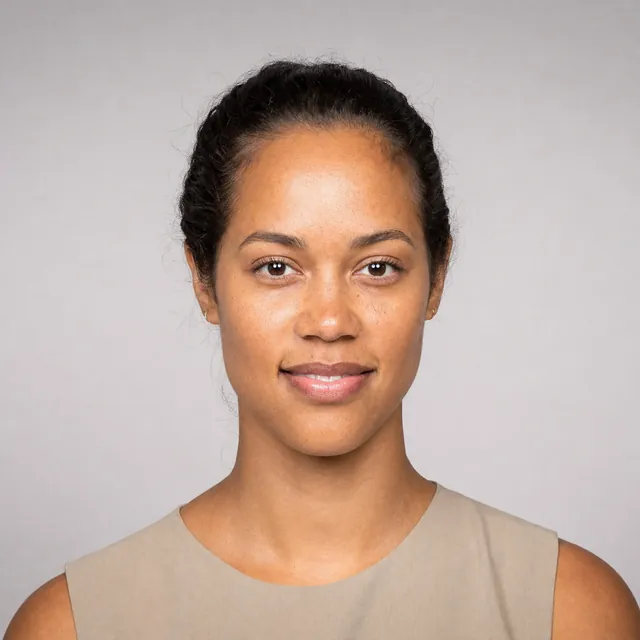
Considered the most balanced face shape. The forehead is slightly wider than the chin, with high cheekbones and a gently narrowing jawline.
Read the full guide →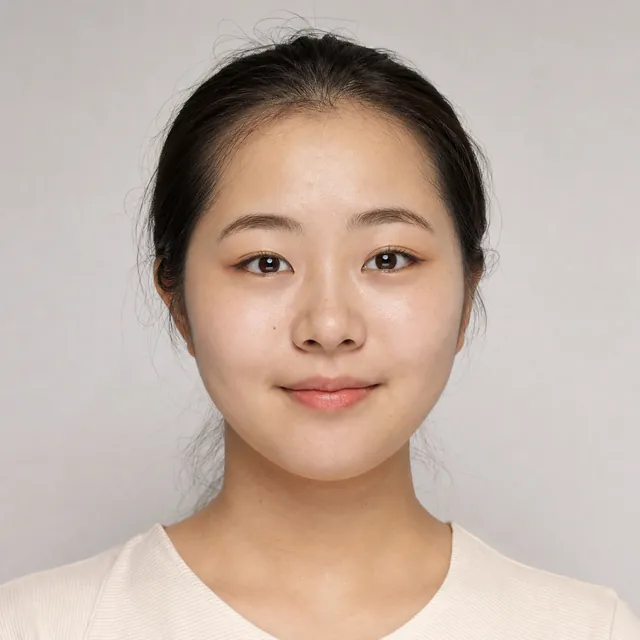
Width and length are nearly equal. Full cheeks, a rounded chin, and a softer jawline define this shape. Looks youthful and approachable.
Read the full guide →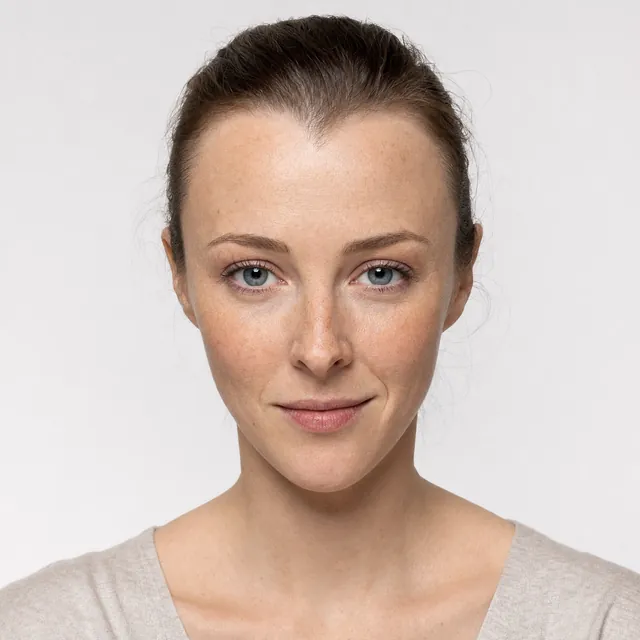
A wider forehead and cheekbones that taper down to a narrow, sometimes pointed chin. Often accompanied by a widow's peak hairline.
Read the full guide →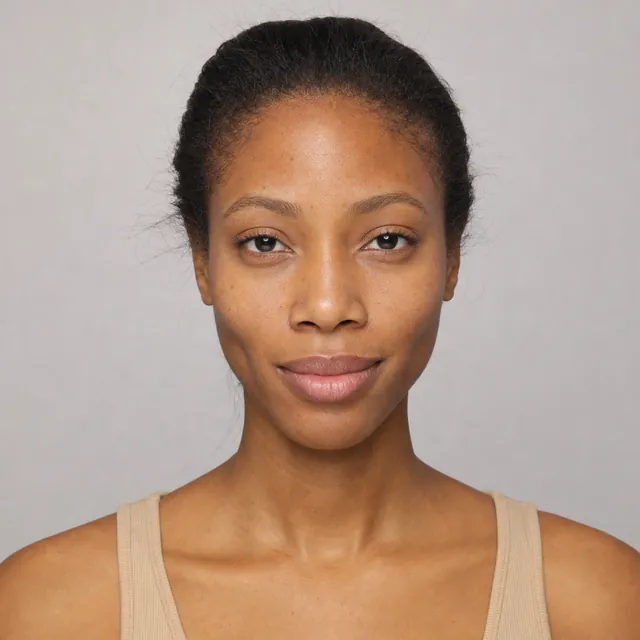
Narrow forehead and jawline with wide, prominent cheekbones. The most angular face shape with a dramatic, striking appearance.
Read the full guide →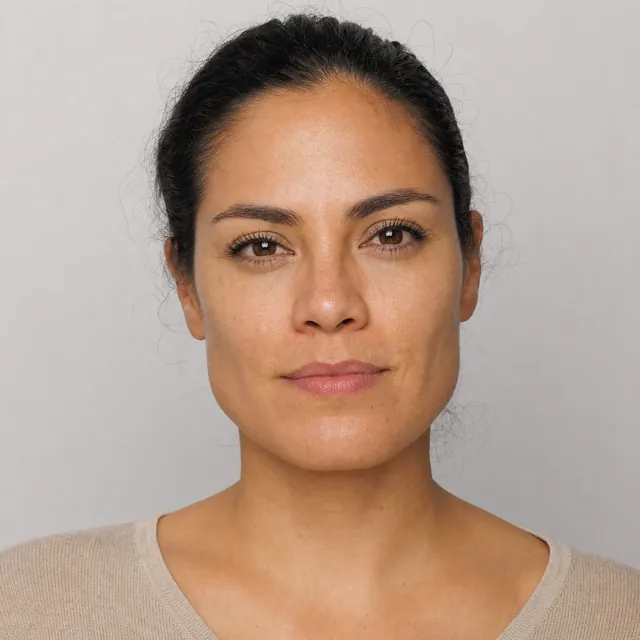
Strong, angular jawline with a wide forehead. The width of the forehead, cheekbones, and jaw are roughly equal, giving a defined look.
Read the full guide →
Longer than it is wide, with a more elongated appearance. Forehead, cheekbones, and jawline are similar in width with a longer chin.
Read the full guide →Two faces can share the same label and still look nothing alike, so treat these six shapes as reference points, and expect your own face to lean toward one while borrowing traits from a neighbor. The descriptions below cover the proportions that define each shape, what to look for in your own photo, and one practical way the shape changes your makeup or glasses choices. For a side-by-side comparison table and a walkthrough of the four measurements behind these categories, see the full face shapes guide.
An oval face is longer than it is wide, with a forehead slightly wider than the chin and cheekbones sitting at the widest point. The jawline curves gently with no hard corners, and the chin rounds off instead of coming to a point. In a photo, look for smooth, even lines running from temple to chin on both sides. Because the proportions are already balanced, most makeup placement works without correction; contour is optional and usually limited to light definition under the cheekbones. Nearly any glasses frame suits this shape, which gives you freedom the other five don't get. Read more in our oval face shape guide.
A round face measures nearly the same across as it does top to bottom, with full cheeks and a soft, curved jaw. The widest point sits at the cheeks rather than the cheekbones, and the chin is short and rounded. In a photo, the outline looks circular, with no visible angle where the jaw meets the chin. Contouring a round face adds the definition the bone structure keeps hidden: shadow along the temples and under the cheekbones, highlight down the center of the face. Angular or rectangular glasses frames add structure, while round frames tend to echo the softness. See the full round face shape guide.
A heart face is widest at the forehead, tapers through the cheekbones, and ends in a narrow, often pointed chin. Many people with this shape also have a widow's peak, which makes the heart outline easier to spot at the hairline. In a photo, check whether your forehead is clearly the widest zone and your chin the narrowest. Makeup for a heart face usually rebalances the top-heavy proportions: a light contour at the temples visually narrows the forehead, while blush kept low on the cheeks draws attention downward. Bottom-heavy or rimless glasses frames work well here. Details are in the heart face shape guide.
A diamond face is narrow at both the forehead and the jaw, with cheekbones that flare noticeably wider than either. It is the least common of the six shapes and the easiest to confuse with heart or oval. In a photo, compare your hairline width to your cheekbone width; a large jump between the two is the giveaway. Since the cheekbones already dominate, contour under them is rarely needed, and highlighter on the forehead and chin widens the narrow zones instead. Glasses with detail along the top line, such as browline or cat-eye frames, balance the width. Read the diamond face shape guide.
A square face has a forehead, cheekbones, and jaw of roughly equal width, finished with a strong, flat jawline that turns at a sharp angle below the ears. In a photo, the sides of the face run nearly straight down, and the chin looks wide rather than pointed. Contouring a square face softens the corners: shadow at the angles of the jaw and the outer corners of the forehead, with blush swept in circles on the apples of the cheeks. Round and oval glasses frames offset the straight lines better than boxy ones. The square face shape guide covers placement in detail.
An oblong face has the balanced widths of a square face but runs noticeably longer, usually with a taller forehead, a longer nose section, or an extended chin. In a photo, the face looks clearly longer than it is wide, and the width barely changes from top to bottom. Makeup for this shape works horizontally: blush placed flat across the cheeks rather than swept upward, plus contour along the hairline and under the chin to shorten the visible length. Deep glasses frames with a low bridge do the same job for the middle of the face. The oblong face shape guide goes deeper.
Most people who take this face test arrive with one of three questions. Some are deciding on makeup: contour, blush, and highlighter sit differently on a round face than on a square one, so knowing your shape before you buy tells you where product should actually go. Some are shopping for glasses: frames look best when they play against your natural lines, which is why angular frames tend to suit round faces and rounded frames tend to suit square ones. And plenty of people simply want an answer to "what shape is my face" with no purchase in mind at all.
All three groups get the same thing from the face tester: a straight answer in a few seconds, a confidence score that tells you how much to trust it, and recommendations you can use or ignore. There is nothing to install, so all it takes to settle the question is one selfie.
Expert guides on face shapes, contouring, makeup placement, and beauty tips.
A zone-by-zone guide to identifying your face shape and understanding what it means for your makeup.
Specific contour, blush, and highlight placement for oval, round, square, heart, diamond, and more.
Complete routine from foundation to finish, with placement tips designed for round face proportions.