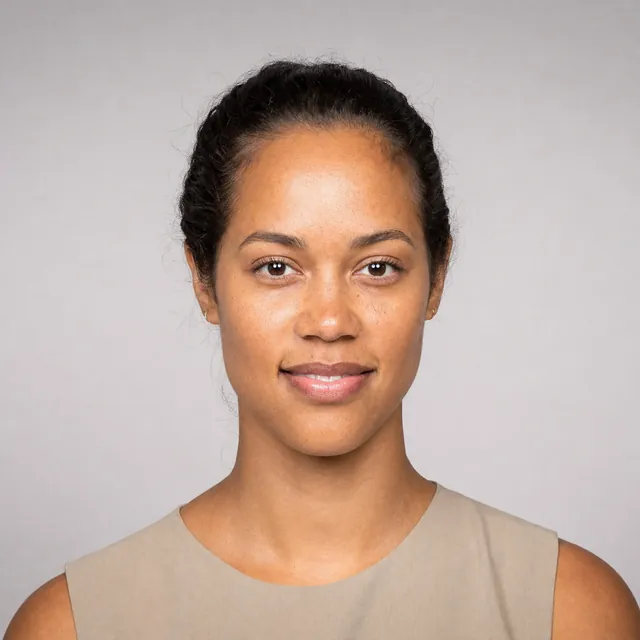
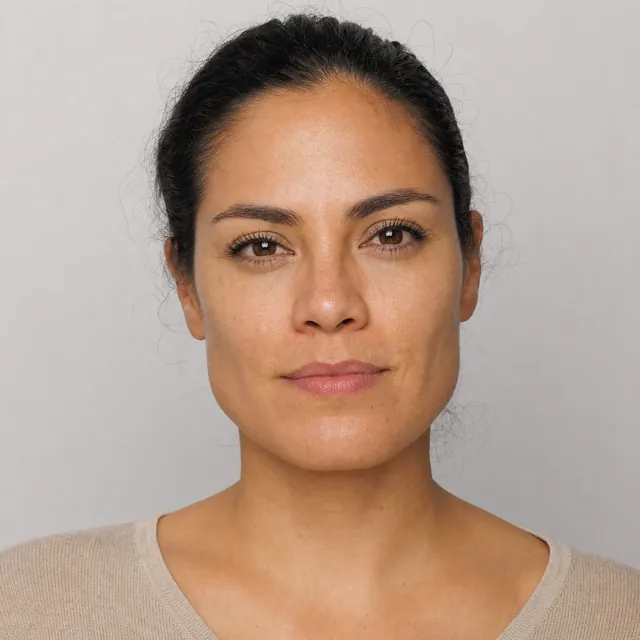
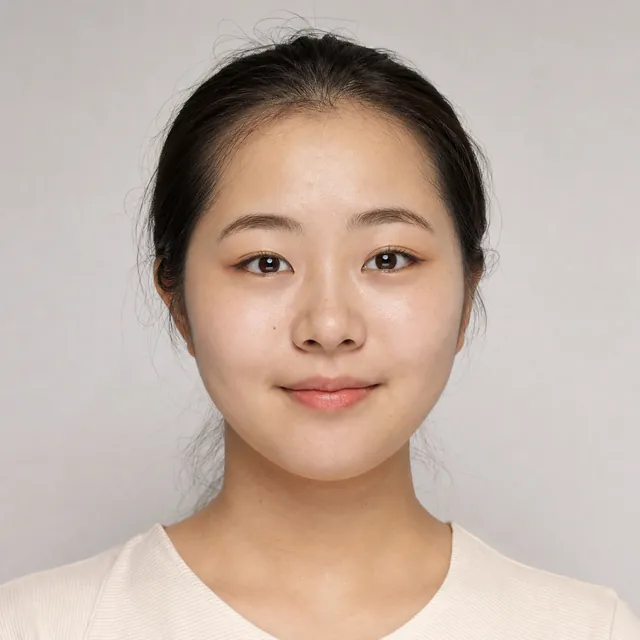
You've probably watched someone on YouTube pull off a contour technique that looked effortless, tried it yourself, and ended up looking like you smeared war paint across your cheeks. The technique was fine. The placement was wrong for your face.
Makeup application is geometry. Where you put product matters more than what product you use, and the geometry changes based on the proportions of your face. A blush placement that lifts one person's cheekbones will flatten another person's mid-face. An eyeshadow shape that opens up narrow-set eyes will make wide-set eyes look disconnected.
This guide breaks down specific makeup looks and product placement for each face shape. Not vague advice like "contour your cheekbones." Actual placement: where to start the line, where to stop it, which direction to blend. The techniques draw from the Dear Peachie makeup archetype system, which maps makeup styles to facial structure rather than body type or personal taste.
If you already know what face shape you have, skip to your section. If you're unsure, read our guide on how to determine your face shape or upload a photo for a quick analysis.
Why Face Shape Changes Your Makeup Placement
Most makeup guides stop at "round face = contour the sides." That's a start, but it ignores why the contour goes there and what else needs to shift when you move one element.
Your face has three horizontal zones. The upper zone runs from the hairline to the eyebrows. The middle zone covers the brows to the base of the nose. The lower zone extends from the nose to the chin. When these three zones are roughly equal in height and the face width (across the cheekbones) is about two-thirds of the total face length, you get what most charts call an oval proportion.
Anything that deviates from that proportion tells you where makeup needs to compensate. A face that's wider than two-thirds needs vertical emphasis. A face that's longer needs horizontal emphasis. A jaw that's wider than the forehead needs the upper face opened up. A forehead that dominates needs the temples pulled back. Every single placement decision follows from these proportions.
The Dear Peachie archetype system adds a second layer to this. Beyond just face shape, it considers two parameters: visual weight (how much presence your features command based on size and projection) and angularity (whether your features read as soft and rounded or sharp and bony). A round face with prominent angular cheekbones needs different treatment than a round face with soft, fleshy cheeks, even though both are "round."
Visual Weight and Angularity: The Two Axes
Before jumping to individual face shapes, it helps to know where you fall on two scales.
Visual Weight
Visual weight is how much space and attention your features take up. It has nothing to do with body weight. A person with a small nose, narrow eyes, and a short lower face has low visual weight. Their features recede, giving an impression of softness and delicacy. A person with a prominent nose bridge, wide-set eyes, and a long lower face has high visual weight. Their features project forward, creating more shadow, more dimension, more visual impact when you look at them.
Low visual weight faces look younger and more neotenous (the technical word for retaining childlike proportions into adulthood). Makeup for low visual weight faces usually aims to preserve that quality. Heavy contour and dark pigments overwhelm the features. High visual weight faces can handle bolder products, deeper pigments, and more sculpted contour without the makeup taking over.
Angularity
Your features are either predominantly rounded (fleshy cheeks, curved jawline, soft brow arch, rounded nose tip, wide doe eyes) or predominantly angular (visible bone structure, defined jawline, sharp brow arch, narrow nose bridge, elongated eyes). Most people sit somewhere in between, but lean one way.
Rounded features look best when the makeup preserves or enhances the softness. Expanding-shade blush (blush applied outward from the cheeks), dewy skin, glossy lips. Angular features look best when the makeup plays up the structure. Contouring-shade blush (applied along the cheekbone line), matte finishes, defined lip edges.
These two parameters (weight and angularity) create a grid. The Dear Peachie system plots eight makeup archetypes across this grid: Ingenue (low weight, rounded), Gamine (low weight, angular), Natural (moderate weight, balanced), Elegant (moderate weight, rounded), Classic (moderate-high weight, balanced), Romantic (high weight, rounded), Modern (moderate-high weight, angular), and Dramatic (high weight, angular). Your face shape determines your contour map. Your visual weight and angularity determine your color palette, intensity, and finish.
With that context, here are the placement specifics for each face shape.
Oval Face: The Flexible Canvas
Oval proportions mean your three facial zones are roughly equal and your face width is about two-thirds of its length. The forehead is slightly wider than the chin, and the cheekbones are the widest point. Everything tapers gently without any one feature dominating.
Contour
Light contour under the cheekbones. You're enhancing existing balance, not correcting anything. Place your contour shade in the hollow of the cheek (find it by pressing your finger along the cheekbone and feeling for the dip underneath). Start the line at mid-ear and stop it at the outer edge of your iris when looking straight ahead. Blend upward toward the hairline, never downward toward the mouth.
Blush
Smile and place blush on the apple of the cheek, blending it up toward the cheekbone. Oval faces have the most flexibility here. You can pull blush higher toward the temples for a lifted look or keep it centered on the apples for something more youthful. Peach and pink tones work across most skin tones for this shape.
Eyes
Because the face proportions are balanced, you can wear nearly any eye shape without it fighting your structure. The real question is your archetype. If your features are soft and your visual weight is moderate, the Elegant archetype works well: earth tone shadows blended through the crease, a subtle liner to elongate, highlight on the center of the lid. If your features are angular and your visual weight is higher, the Modern archetype gives you more to work with: a defined wing, deeper shadow in the outer corner, shimmer highlighter on the brow bone.
Lips
Oval faces can support both statement lips and nude shades equally well. Match your lip intensity to where you placed your eye focus. Heavy eyes, light lips. Light eyes, fuller lip color.
Round Face: Creating Vertical Structure
A round face has similar width and length measurements, with no dominant angles. The chin is rounded, the jawline is soft, and the cheek area carries fullness. For a step-by-step routine designed specifically for this shape, see our best makeup for round face shape guide. People constantly confuse cheek fullness with a round face shape. Drew Barrymore gets labeled "round face" all the time, but her proportions are actually oval. What she has is soft, fleshy cheeks that sit forward without much visible bone structure underneath. If your face measurements actually show equal width and length, you have a round face. If your proportions are longer but your cheeks are just full, you probably have an oval face with round cheeks.
Contour
The goal is to create the illusion of length and sharpen angles that the bone structure doesn't provide naturally. Contour the sides of the face from the temple down along the jawline. Place a soft shadow along the outer edges of the forehead at the hairline. Add contour along the jawline to give it some definition. You're essentially drawing a narrower face within your actual face.
A common mistake is going too dark on round faces. Because the contour is creating shadows that don't naturally exist (unlike angular faces where you're restoring shadows that foundation covered), heavy-handed contour reads as obvious face paint. Use a shade no more than two tones darker than your skin and build in thin layers.
Blush
Sweep blush slightly higher than the apple, angling it upward toward the temple. This creates lift and vertical movement. Avoid placing blush directly on the fullest part of the cheek and blending outward, which adds width. Think of the blush as an arrow pointing up and back, not sitting flat and round.
Eyes
Vertical emphasis works here too. Blend eyeshadow higher above the crease to open the eye area upward. A lifted wing that angles toward the tail of the brow (rather than a straight horizontal wing) pulls the visual focus up. The Ingenue archetype is a natural match for round faces with low visual weight: rounded brows, soft coral or pink shadow, liner thickened above the pupil to make the eyes appear wider and rounder, with lower lash shimmer for a doe-eyed effect.
For round faces with higher visual weight, the Natural archetype works better. Fluffy straight brows, low-saturation earth tones all over the lid, tight-lined inner lash line, and a focus on creating depth through shadow rather than bold color.
Lips
Nude tones and lip colors close to your natural shade keep the focus on the eye and contour work. If you're doing a minimal eye, you can go bolder on the lip, but avoid extremely rounded lip shapes (over-lining both top and bottom). Instead, define the cupid's bow with a liner and let the lower lip stay more natural to add some angular contrast.
Heart Face: Balancing Top and Bottom
A heart-shaped face is wider at the forehead and cheekbones, narrowing to a smaller or more pointed chin. The upper face carries the width. Sometimes called an inverted triangle, though heart-shaped faces tend to have a softer, more pointed chin while inverted triangles have a broader, flatter jawline that still narrows.
Contour
Focus contour on the temples and the sides of the forehead. You're narrowing the upper face to match the lower face. Place your contour shade at the temples right where the hairline starts, and blend it inward and slightly downward. A soft shadow along the outer forehead on both sides helps pull the whole upper section inward.
Skip heavy jawline contour. The jaw on a heart-shaped face is already narrower than the cheeks, and adding shadow there makes it recede further, which exaggerates the imbalance you're trying to correct.
Blush
Apply blush on the apples of the cheeks and blend slightly outward toward the ears. Keeping blush in the lower half of the cheekbone zone draws the eye downward, which counteracts the top-heavy proportion. Avoid placing blush high near the temples, which adds more width to the already-wide upper face.
Highlight
Add highlight to the chin. A touch of shimmer or light concealer at the tip of the chin broadens it visually and brings it forward, closing the gap between the wider upper face and the narrow lower face. Highlight down the center of the nose and on the center of the forehead, but skip the outer forehead, which is already prominent.
Eyes
The eye area on a heart-shaped face sits in the widest zone, so eye makeup can go either direction without throwing off the proportion. The Elegant archetype works particularly well here: a precise, minimal approach with earth tones, light contouring of the crease, and subtle liner to elongate. The idea is sophistication without drama, letting the naturally wider eye area speak on its own. Rich girl makeup, French girl makeup, and the Korean ladylike look all fall under this umbrella.
Lips
Fuller lip application draws attention down to the lower face, which helps the overall balance. Line the lips slightly outside your natural line (nothing extreme) and apply a full coat. Warm shades, glossy finishes, and visible color all work here because you want the lips to hold their own against the dominant upper face.
Square Face: Softening Angles (Or Playing Them Up)
A square face has a forehead, cheekbones, and jaw that are all roughly the same width, with a strong angular jawline. The jaw angle is visible and defined, giving the lower face a structured, almost architectural quality.
Here's where most guides go wrong: they assume you want to soften a square face. Some people do. Some people want to amplify those angles, and there's a whole makeup archetype built for that. The choice depends on your angularity score and the look you're going for.
Option 1: Softening the Angles
Contour along the jaw angles and the corners of the forehead. Place a shadow where the jawbone turns upward toward the ear, blending it toward the center of the jaw. At the forehead, shade the outer corners where the hairline creates a squared-off top. Blush goes toward the center of the cheeks rather than along the cheekbone line, adding roundness. Rounded brow shapes (soft arch, no sharp peak) complement this approach.
The Classic archetype targets this look. It's the rarest archetype and suits people with moderate-to-high visual weight whose features balance right between angular and rounded. No feature stands out. Everything is harmonious and proportional. Minimal eyeshadow, brows filled with a gentle curve, lighter rosy blush from the apple toward the cheekbone, lip shades close to natural color. The word that captures it is "polished" without being dramatic.
Option 2: Playing Up the Structure
The Modern and Dramatic archetypes lean into angular bone structure rather than fighting it. The Modern archetype puts the focal point on the eyes and brows: a defined wing, sharp inner corner liner, cut crease or smokey eye, shimmer highlighter on the brow bone and cheekbone peak. Facial contour is heavy and intentional. The nose is sculpted narrow, the chin highlighted, the mid-face brightened. This is the archetype behind most Western Instagram/YouTube makeup looks.
The Dramatic archetype goes further. It treats the entire face as a canvas with equal weight on eyes and lips, using richer (not necessarily brighter) pigments. The fiercely mean sub-style within Dramatic leans into the coldness that angular structure creates: all-around eyeliner, straight or sharp-arched brows lifted with brow gel, earthy or metallic shadows, wine-red lips. Blush is barely visible. The bone structure does the sculpting work.
Diamond Face: Already Sculpted
A diamond face shape is narrow at the forehead and jaw, with cheekbones as the widest point. The face has a naturally angular, sculpted quality. Most people with diamond faces notice that their cheekbones cast visible shadows even without makeup, especially when they turn slightly to the side.
Contour
Go minimal. Your face already has the dimension that contour tries to create. A light contour below the cheekbones is all you need, and even that is optional. Over-contouring a diamond face is one of the most common makeup mistakes. When foundation goes on, it flattens out the natural shadows your bone structure creates. Contouring in this case is really about restoring what the foundation covered, not building new structure.
Blush and Highlight
Use highlight to add width to the narrow forehead and chin. A touch of shimmer at the center of the forehead and the tip of the chin broadens those zones. Blush on the apples of the cheeks and blended slightly downward (rather than upward toward the already-prominent cheekbones) keeps the width in the mid-face rather than exaggerating it.
Eyes
Diamond faces with lower visual weight fit the Gamine archetype well. Gamine makeup is airy, boyish, and minimal. Matte foundation for a smooth finish. Straight or slightly arched brows, kept bushy and natural. Low-saturation eyeshadow in beige, grayish, or warm brown tones, blended toward the inner corner rather than the outer corner (this is the opposite of what most tutorials teach, and it deepens the nose bridge area instead of widening the outer eye). Skip mascara or use a lengthening formula rather than volumizing. Nude or milk-tea lip shades. The whole effect is effortless and cool.
If that feels too stripped-back, the soft grunge sub-style of Gamine adds intensity through the lower lid: deeper shadow blended along the lower lash line, brown gel liner on the waterline, and a focus on looking slightly undone.
Lips
Because the jaw is narrow, fuller lip application can add visual weight to the lower face and balance the cheekbone dominance. Line the lips and apply a full coat. Choose shades that have some presence rather than disappearing into your skin tone.
Oblong Face: Adding Width
An oblong face is noticeably longer than it is wide. The forehead, cheekbones, and jaw are usually similar in width, but the face just keeps going vertically. The distance from hairline to chin is long relative to the width across the cheeks.
Contour
Shade the top of the forehead along the hairline and the bottom of the chin. You're shortening the face from both ends. Avoid contour down the sides of the face, which makes it look even narrower. Skip temple contour entirely.
Blush
Place blush wider on the apples of the cheeks, sweeping outward toward the ears rather than upward toward the temples. You want horizontal movement. Blush placed high creates lift, which adds length. Blush placed flat across the cheeks creates width. For oblong faces, flat wins. The Romantic archetype handles this well: pink or coral blush swept across the fullest part of the cheeks, chin, and sides of the temples for an all-over rosy flush. Dewy finishes amplify the width effect because light catches across a broader area.
Highlight
Extend highlight wider on the cheekbones rather than down the center of the face. A vertical highlight stripe from forehead to chin (which works on round faces) would add more length here. Instead, keep highlight horizontal: across the cheekbone peaks, a bit on the bridge of the nose, and that's it.
Eyes
Wider eyeshadow application helps. Blend shadow outward toward the outer corner and extend it slightly beyond the eye. A horizontal wing rather than an upward-angled wing adds width. Lower lash emphasis (shadow or liner along the bottom) opens the eye zone downward, consuming some of that vertical space. Falsies with longer outer lashes pull the visual focus outward.
Lips
The flirtatious cute sub-style from the Romantic archetype works well here: vibrant lip shades with glossy finish, full coat application, defined edges. Strong lip color placed in the lower third of a long face creates a focal point that stops the eye from traveling the full length of the face.
The Eight Makeup Archetypes: Quick Reference
The Dear Peachie system maps these eight archetypes across visual weight (vertical axis) and angularity (horizontal axis). Your face shape tells you where to put product. Your archetype tells you how much product to use, what finishes and colors to pick, and which features to emphasize.
| Archetype | Visual Weight | Angularity | Key Characteristics |
|---|---|---|---|
| Ingenue | Low | Rounded | Cute, youthful, dewy. Rounded brows, coral/pink shadow, doe-eye liner, glossy lip |
| Gamine | Low | Angular | Cool, boyish, airy. Bushy straight brows, neutral matte shadow, minimal liner, nude lip |
| Natural | Moderate | Balanced | Easygoing, effortless. Fluffy brows, earth tones, tight-lined lash, rosy or nude lip |
| Elegant | Moderate | Rounded | Graceful, serene, deliberate. Shaped brows, precise earth shadow, subtle liner, natural lip |
| Classic | Moderate-High | Balanced | Polished, harmonious, rare. Rounded brows, minimal shadow, natural liner, skin-tone lip |
| Romantic | High | Rounded | Feminine, sensual, glamorous. Soft arch brows, warm shadow, doe/siren hybrid eye, glossy bold lip |
| Modern | Moderate-High | Angular | Bold, trend-forward, confident. Sharp brows, cut crease or smokey eye, wing liner, statement lip or eye |
| Dramatic | High | Angular | Intense, commanding, exotic. Dense brows, rich earth/metallic shadow, all-around liner, wine-red lip |
Most people are a blend of two archetypes: a primary that matches their strongest features and a secondary they gravitate toward by preference. Jisoo from BLACKPINK, for example, scores closest to Elegant as her primary archetype but shifts into Natural or Ingenue for some looks. Jennie leans Ingenue-primary with Romantic elements. The archetype isn't a box. It's a starting coordinate.
Mixing and Adapting Between Archetypes
Makeup style isn't carved in stone. It shifts with occasions, age, seasons, and personal preference. The archetype system gives you a home base, but you can pull techniques from adjacent archetypes whenever you want.
A few rules of thumb for mixing:
- Stay within one step of your primary archetype on the grid. If you're Natural, pulling from Elegant or Gamine works smoothly. Jumping from Natural to Dramatic skips too many parameters and usually looks disjointed.
- When mixing, choose one archetype for the base (foundation, contour, blush) and one for the feature focus (eyes or lips). Doing Natural base with Elegant eyes keeps the look cohesive.
- Your brow shape anchors the whole look. Changing from rounded to sharp brows can shift the entire perceived archetype more than any other single change.
- If you're between two archetypes (your score lands on the border), lean into whichever one matches the occasion. Job interview? Classic or Elegant. Night out? Romantic or Modern.
The sub-styles within each archetype offer additional range. The Elegant archetype alone spans rich girl makeup, French girl makeup, the Chinese xinhua trend, and Korean ladylike looks. Each of these has a different feel while following the same structural principles.
The Retro Hong Kong sub-style within Romantic is especially interesting for people with high visual weight and angular features who want something outside the typical Western Modern look. It's a vintage approach where dense, dark brows contrast with red lips, matte skin, and minimal eye shimmer. The bone structure does most of the work. It originated from the collision of Eastern and Western beauty standards in 1980s Hong Kong, and it still reads as both current and timeless when executed well.
Thai makeup, another Dramatic sub-style, bridges Western sculpting techniques with Asian color sensibility: heavy contour and highlighted bone structure, but using lighter earth tones on eyes and sheer lip finishes instead of the saturated pigments you'd see in a Western glam look. It works in tropical lighting where matte finishes prevent shine without looking flat.
How to Find Your Face Shape
Everything in this guide depends on knowing your proportions. You can measure manually (divide your face into three zones, compare width to length, assess your jaw angle and forehead width) as described in our face shape determination guide, but most people find it hard to evaluate their own face objectively. We focus on individual features when we look in the mirror, not the overall proportions.
If you're comparing makeup looks and trying to figure out which face shape sections apply to you, a face shape detector can give you an objective read. Upload a front-facing photo and the AI measures the relationships between your forehead width, cheekbone width, jawline width, and face length. You get a classification along with a written explanation of what your specific detected face shape means for product placement.
A face shape analyzer is particularly useful if you think you fall between two categories, which most people do. Maybe your proportions are oval but your jaw is squarer than textbook oval. Maybe your face reads as round in photos but your cheekbones are angular enough to qualify as diamond. The face shape AI can break down exactly where you sit and which makeup approaches will work best on your specific combination of features.
Practical Takeaways
Your face shape determines where makeup goes. Your visual weight and angularity determine what kind of makeup suits you. These are two separate questions that most guides collapse into one.
A round face with high visual weight and angular cheekbones (Romantic or Modern archetype) needs completely different products than a round face with low visual weight and soft features (Ingenue archetype), even though the contour placement is similar. The contour map comes from the face shape. The color palette, intensity, and finish come from the archetype.
Know both, and you stop guessing. You stop copying tutorials filmed on someone with a completely different face and wondering why it looks wrong on you. You start placing product where your actual bone structure and proportions call for it, using colors and finishes that match the natural presence of your features. That's when makeup stops being a guessing game and starts working consistently.