Your face shape is the overall geometry of your face: how long it is relative to its width, where it carries that width, and how the jaw meets the chin. Nearly every styling system, whether for glasses, makeup, or brows, sorts faces into six types: oval, round, square, heart, diamond, and oblong. The sorting rests on four measurements. Compare the width of your forehead, cheekbones, and jaw, then set all three against the length of your face from hairline to chin. The pattern those numbers form points to one of the six shapes.
This page describes each type, walks through the measuring method, and links to a full guide for every shape. If you would rather skip the math, our free AI detector reads the same proportions from a single photo.
The Six Face Shape Types
The cards below show how the different face shapes compare. Each one lists the proportions that define the shape and links to a full guide covering makeup, contouring, glasses, and celebrity examples.

Oval
An oval face is about one and a half times longer than it is wide. The cheekbones are the widest point, the forehead is slightly narrower, and the jaw tapers smoothly into a rounded chin. Because nothing dominates, most styling advice treats oval as its starting point.
Read the full oval guide →
Round
A round face measures nearly the same in length and width, with full cheeks as the widest zone. The jawline curves without corners and the chin stays soft and short. The outline reads as a circle rather than an egg, which is the quickest way to separate round from oval.
Read the full round guide →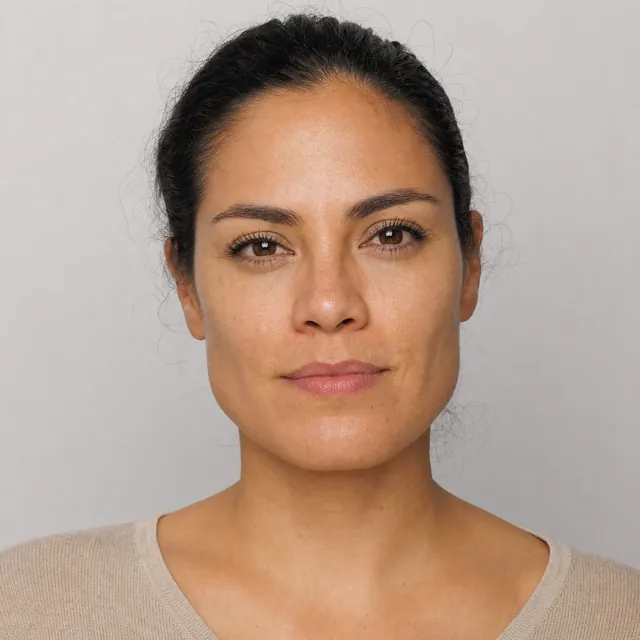
Square
On a square face the forehead, cheekbones, and jaw all measure close to the same width, and the jaw turns a visible corner below each ear. Length and width are often similar too. The strong, angular jawline is the defining trait and the first thing to check for.
Read the full square guide →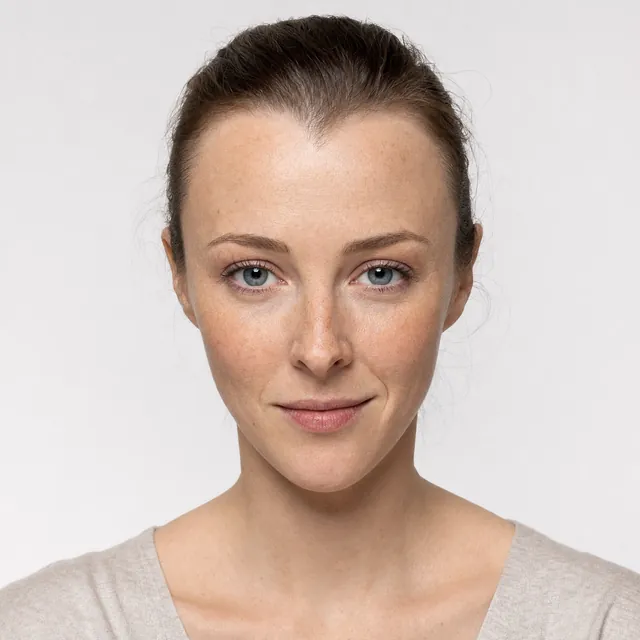
Heart
A heart face is widest at the forehead, narrows through the cheekbones, and finishes in a small, often pointed chin. Many heart faces also show a widow's peak at the hairline, which sharpens the resemblance to the shape it is named after. The top-heavy balance sets it apart.
Read the full heart guide →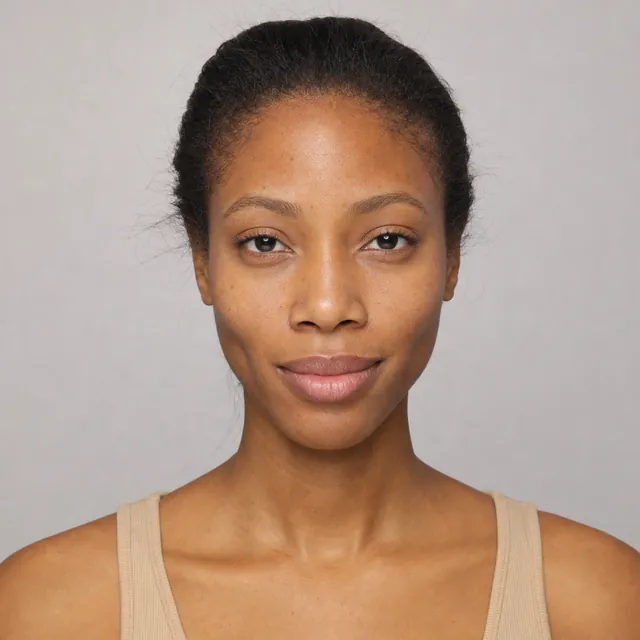
Diamond
A diamond face puts all of its width in the cheekbones. Both the forehead and the jawline measure narrower, so the face tapers toward the hairline and the chin at the same time. The chin is usually pointed, and the overall outline is the most angular of the six.
Read the full diamond guide →
Oblong
An oblong face runs noticeably long, usually over 1.6 times its width, while the forehead, cheekbones, and jaw stay close to one width. The sides of the face look almost straight. It shares the even proportions of a square face, stretched over a longer frame.
Read the full oblong guide →How to Find Your Face Shape
You can sort yourself into one of the facial shape types with a mirror and a soft measuring tape. Pull your hair back so your hairline and jaw are visible, look straight ahead, and take four measurements:
- Face length, from the center of your hairline down to the tip of your chin.
- Forehead width, across the widest part, roughly midway between your eyebrows and hairline.
- Cheekbone width, from just below the outer corner of one eye across to the other.
- Jaw width, following the jawline from the corner below one ear to the corner below the other.
Two comparisons do most of the sorting. Divide the length by the cheekbone width: a result well above 1.5 points to oblong, around 1.5 to oval or heart, and close to 1 to round or square. Then find the largest of the three widths. Cheekbones on top point to oval, round, or diamond. A forehead on top means heart. If all three widths sit within half an inch of each other, you are in square or oblong territory. The jawline settles the remaining ties, since corners separate square from round and oblong from oval.
Faces that split the difference are normal. If your numbers straddle two rows of the table below, read both guides and lean on whichever description matches your mirror. The free face analyzer on our homepage runs the same comparison from a photo when you want a second opinion.
Comparison at a Glance
This face shape chart condenses the six face shape types into the checks that separate them. Most faces match one row closely and borrow one detail from a neighboring row, so treat the closest match as your primary shape.
| Shape | Length vs width | Widest point | Jaw | Quick tell |
|---|---|---|---|---|
| Oval | About 1.5 times longer | Cheekbones | Soft curve, rounded chin | Even taper from cheeks to chin |
| Round | Nearly equal | Cheeks | Curved, no corners | Circular outline, full cheeks |
| Square | Nearly equal | Even across all three | Angular, visible corners | Corners at the jaw, wide hairline |
| Heart | Slightly longer | Forehead | Narrow, tapering | Wide forehead, pointed chin |
| Diamond | Longer than wide | Cheekbones, by a clear margin | Narrow, pointed | Narrow forehead and narrow jaw |
| Oblong | Over 1.6 times longer | Even across all three | Straight sides, gentle chin | Long face, uniform width |
Pinning your shape down pays off when you pick glasses, place contour, or shape your brows, because nearly every fitting chart in those categories is organized by these six types. Each full guide linked above covers those choices for its shape in detail. Face shape guides the structure of those choices; the colors that flatter you are a separate question, and our free color analysis reads your undertone and season from a photo the same way.
Frequently Asked Questions
How many face shapes are there?
Most classification systems use six face shapes: oval, round, square, heart, diamond, and oblong. Some guides add a seventh category, triangle, for faces with a jaw wider than the forehead, and others treat oblong and rectangle as separate labels for the same proportions. The six-type system covers the vast majority of faces, which is why stylists and opticians work from it.
What is the rarest face shape?
Diamond is the rarest face shape. It requires cheekbones that measure clearly wider than both the forehead and the jaw, so the outline tapers in two directions at once. Most faces carry extra width at the forehead or the jawline instead, which pushes them toward heart, square, or oval and leaves true diamond faces in a small minority.
What is the most common face shape?
Oval and round are the most common face shapes, and oval is usually the larger group of the two. Oval proportions (moderate length, cheekbone-led width, and a soft taper to the chin) sit close to the average of human facial measurements, so more people land in that category than in any other.
Can you have two face shapes?
You can land between two categories, and plenty of people do. A face can combine an oval taper with square jaw corners, or round softness with oblong length. When that happens, treat the shape that matches your strongest feature as primary and borrow from the second where it fits. A photo analysis helps because it shows which set of proportions you sit closest to.
Does your face shape change over time?
The bone structure underneath is settled by early adulthood, but the shape you see can still shift. Weight changes show up first in the cheeks and jawline, and skin loses firmness with age, which softens corners and can visually lengthen the lower face. If you last checked your face shape years ago, it is worth measuring again.