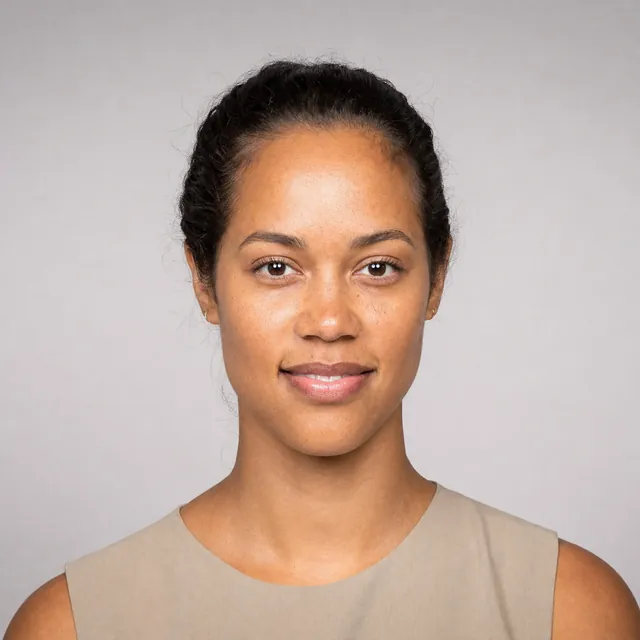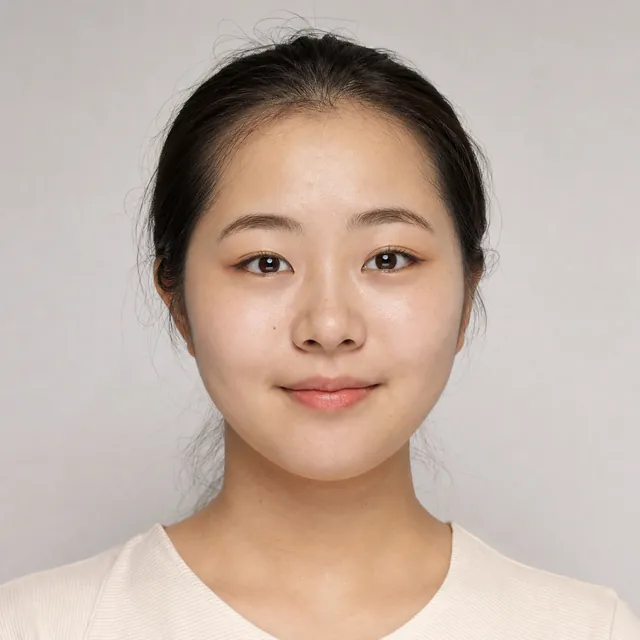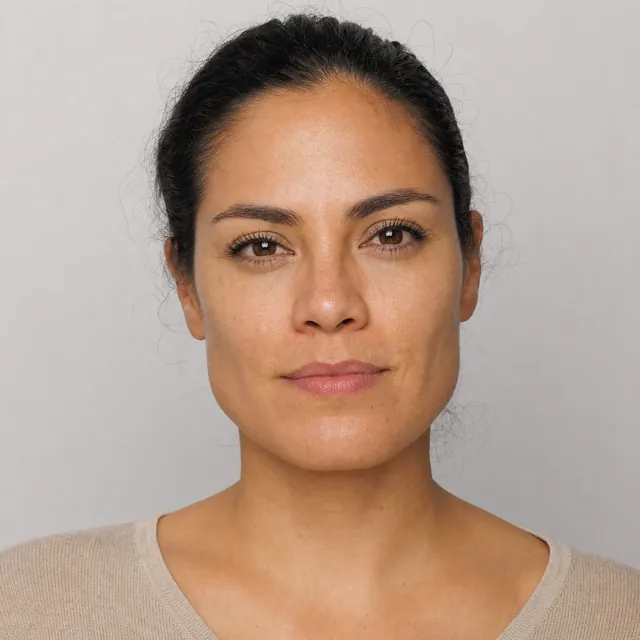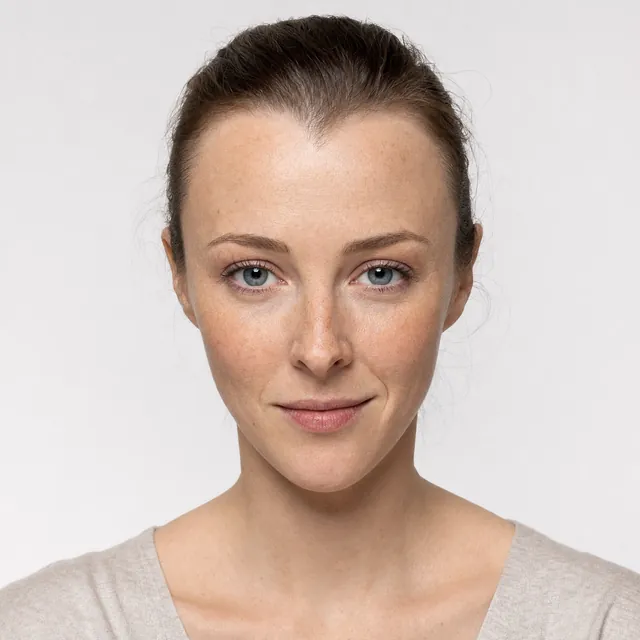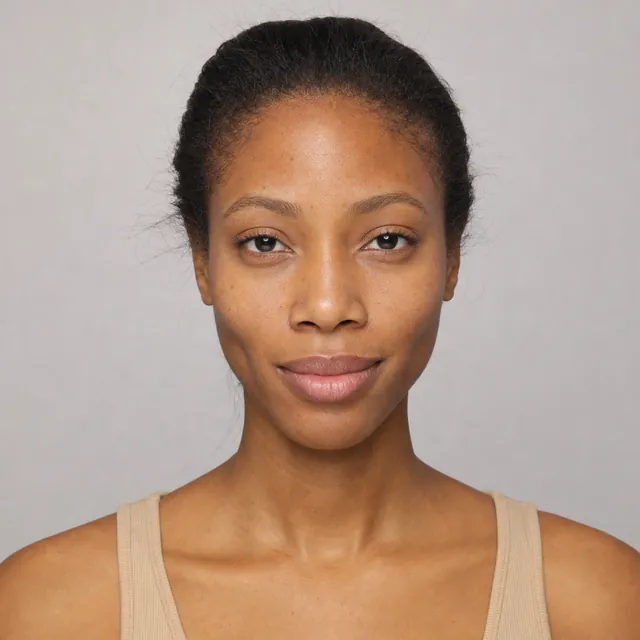
The oblong face is defined by a single dominant fact: length. Where every other shape gets classified by how its width is distributed, an oblong face is simply much longer than it is wide, with a forehead, cheekbones, and jaw that all measure about the same. The sides of the face run nearly parallel, which is why the category is sometimes called rectangular when the jaw is angular, or just "long" in older styling guides.
Length reads as elegance in photographs, and runway modeling has always been full of oblong faces. In day-to-day styling, though, most oblong advice aims the other direction, using makeup, frames, and accessories to add horizontal interest so the face doesn't read as narrow. This guide covers the definition and the ratio that decides it, a self-test with actual numbers, and the width-building techniques that do the work.
What Is an Oblong Face?
Two conditions define the shape. First, face length exceeds cheekbone width by a factor of more than about 1.6, comfortably past the 1.5 that marks a classic oval. Second, the three widths (forehead, cheekbones, jaw) measure nearly equal, so the face holds its width all the way down instead of tapering. Meet the first condition without the second and you have a long oval; meet both and you're oblong.
The extra length usually lives in specific places. Many oblong faces carry a tall forehead, a longer nose bridge, or an extended chin-to-mouth distance, and knowing which of the three applies to you sharpens every technique later on this page. The jawline varies within the category: a soft, curved jaw keeps the classic oblong label, while a hard corner below the ears moves the face into rectangle territory, which shares nearly all of the same styling logic plus the corner-softening tricks used for square faces.
Cheeks on an oblong face tend to look flat rather than full, because the width never spikes at the cheekbones the way it does on a diamond face. That flatness is an asset for structured, editorial looks and the reason strong browlines and bold lips photograph so well on this shape. The one recurring complaint, a face that can read as tired or severe in low light, is exactly what the horizontal makeup techniques below counteract.
How to Tell If You Have an Oblong Face
This is the one shape you can confirm with arithmetic alone. Take two measurements with a soft tape: face length from the center of your hairline to the bottom of your chin, and face width across the widest part of your cheekbones. Divide length by width.
Suppose your face is 8.5 inches long and 5 inches across the cheekbones. That quotient is 1.7, which is past the oblong threshold. A 7.5 inch face on the same width gives 1.5, which reads oval. The boundary sits around 1.6, and honest measuring matters more than the second decimal, so run the tape twice and use a mirror to keep it straight.
Then confirm the second condition by measuring your forehead and jaw. Oblong faces keep all three widths within about half an inch of each other. A quick visual check works too: in a straight-on photo, lay a ruler along each side of your face; on an oblong face the ruler tracks the cheek line from temple to jaw with barely a gap. If your numbers hover at the boundary, or your widths taper enough to muddy the call, the free AI face shape test measures the ratios from your photo and settles it, and our face shape guide explains how the length categories relate to the width ones.
Makeup & Contouring for Oblong Faces
Oblong contouring is the mirror image of round-face technique, and mixing up the two is the most common mistake people with long faces make after watching generic tutorials. Shadow goes at the horizontal ends of the face, not the sides. Sweep contour along the top of the forehead just under the hairline, and add a soft band under the tip of the chin. Those two placements compress the perceived length by up to half an inch each, which is a dramatic change on this shape.
Blush works harder on an oblong face than on any other. Apply it to the apples of the cheeks and blend straight back toward the tops of the ears, keeping the band horizontal. This widens the midface, breaks up the vertical line of the cheek, and adds the color that flat cheek planes tend to lose. Keep highlighter off the center line: a bright stripe down the nose is the standard trick for adding length, which is the one effect you're avoiding. Put your glow on the cheekbone tops and blend outward instead.
Brows finish the job. A flat, elongated brow with minimal arch draws two strong horizontal lines across the upper face, visually shortening the forehead; a high round arch does the opposite. For the full oblong placement map next to the other shapes, see our contouring guide, and if you're building complete looks, the makeup looks by face shape article includes options for long faces.
Best Glasses & Sunglasses for Oblong Faces
Depth is the first spec to check on any frame. A tall lens covers more of the vertical distance between brow and cheek, which shortens the visible midface; a shallow lens does the reverse, leaving empty skin above and below that emphasizes the length. Oversized frames, deep squares with rounded corners, and bold round lenses all work on this principle, and oblong is the one shape that can carry genuinely huge sunglasses without being overwhelmed.
Horizontal detail helps for the same reason blush does. Frames with strong top bars, contrasting temples, or wide arms add side-to-side interest that interrupts the face's vertical lines. A low or decorated bridge subtly shortens the nose, one of the zones where oblong faces often carry their extra length. Color is freer here than fit: both bold and translucent frames sit well against flat cheek planes.
The styles to pass over are narrow rectangles, small ovals, and any lens that sits like a thin letterbox across the face. For accessories, the guidance flips from what heart and diamond faces hear: round hoops, button studs, and clustered earrings add width beside the jaw, while long thin drops extend the vertical line you're already managing. A wide-brimmed hat, for what it's worth, is the oblong face's best friend in the accessory drawer.
Celebrity Examples of Oblong Faces
Sarah Jessica Parker is the name every oblong list starts with, and she's talked openly about styling around a long face over her career. Liv Tyler shows the softer end of the category, with curved edges on unmistakably long proportions. Alexa Chung's face is a running reference in eyewear journalism precisely because she wears deep, oversized frames the way this page recommends.
Among men, Ben Affleck carries the rectangular variant, long with an angular jaw, and stylists point to his aviator-heavy sunglasses record as the textbook response. What unites these four is how differently their faces read depending on styling choices, which is the practical lesson of the whole category: on an oblong face, horizontal styling decisions change the read of the face more than they would on any other shape.
Frequently Asked Questions
Are oblong and rectangular face shapes the same?
Most classification systems treat rectangle as the angular variant of oblong. Both describe a face clearly longer than it is wide with forehead, cheekbones, and jaw of similar width. The label shifts to rectangle when the jaw has a hard corner and the chin finishes flat, while oblong covers the softer, curved-jaw version. Styling advice is the same for both, with rectangles borrowing a little of the square playbook for the jaw.
How long does a face have to be to count as oblong?
The usual threshold is a length more than 1.6 times the cheekbone width. Measure from your hairline to the bottom of your chin, divide by the distance across your cheekbones, and compare. Ratios near 1.5 belong to oval; once the figure clears 1.6 and the three face widths measure roughly equal, oblong is the call.
What makeup makes an oblong face look shorter?
Shading at the two horizontal ends and color spread wide in the middle. A sweep of contour along the top of the forehead at the hairline and another under the chin visually compress the length, while blush applied across the apples and blended horizontally toward the ears adds the width the face lacks. Skip the vertical highlight stripe down the nose, which lengthens the face further.
Which glasses should I avoid with an oblong face?
Narrow, shallow lenses are the main one, since a short lens on a long face leaves a lot of uncovered vertical space and makes the length more obvious. Small round frames and slim rectangles have the same problem. Look instead for deep lenses, oversized silhouettes, and frames with strong horizontal presence or decorative temples.
Is an oblong face just a longer oval?
Not quite, and the difference matters for styling. An oval tapers, with the jaw clearly narrower than the cheekbones, while an oblong face holds nearly the same width from forehead to jaw, which is why its sides look straight. Extra length plus that uniform width is what defines oblong; an unusually long face that still tapers is often better read as a long oval.
Related Reading
- How to Determine Your Face Shape: the width-to-length ratio explained, with all six categories.
- How to Contour for Your Face Shape: the horizontal contour map for long faces.
- Top Makeup Looks for Different Face Shapes: finished looks that add width where it counts.
- Keep reading on the Test My Face blog or get your ratio from the free face analyzer.